Does Gua Sha Work Differently When the Air Gets Dry?
Quick Answer: Gua sha depends entirely on adequate slip, and dry autumn air changes both your skin surface and how fast your facial oil absorbs - so the same amount of product gives noticeably less glide than it did in summer. Drag is not gentle exfoliation; it is friction on a compromised barrier, and it is the main cause of the irritation people report in autumn. Use more oil, work in smaller sections, and reapply as you go.
If the tool is not gliding, stop and add product rather than pressing harder.

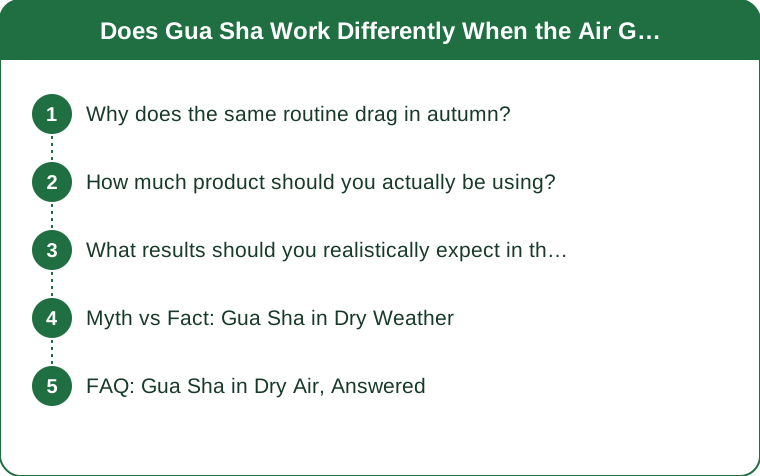
Why does the same routine drag in autumn?
Because two things changed at once - your skin and the product’s behaviour on it.
What dry air does to the skin surface. Indoor heating can drop relative humidity to 20 to 30 percent, and skin loses water to dry air continuously. A dehydrated stratum corneum is rougher and less pliable, which increases the friction coefficient between skin and tool measurably.
What dry air does to your oil or serum:
- Faster evaporation of any water-based component, so the slip phase is shorter
- Some oils absorb more quickly into dehydrated skin, which is generally good for the skin and bad for glide
- Thicker oils behave differently at lower room temperatures and spread less evenly
Why drag matters rather than just feeling unpleasant. Gua sha should glide. When it drags:
- You are creating mechanical friction on the skin surface, which disrupts the barrier further
- You unconsciously increase pressure to make the tool move, which is the main cause of bruising and irritation
- The technique stops working as intended - the point is gentle sustained pressure moving fluid, not scraping
- Micro-irritation accumulates, which is why people report sensitivity building over a few weeks in autumn
How it presents:
- Redness lasting longer than the usual few minutes after a session
- A stinging sensation when applying products afterwards, which indicates barrier disruption
- Small broken capillaries, particularly around the cheeks and nose
- Increased sensitivity to products you normally tolerate
The right response. More slip, not more force. If the tool is not moving smoothly, the answer is always more product - never more pressure. This is general information, not medical advice.
How much product should you actually be using?
Noticeably more than summer, and reapplied during the session rather than only at the start.
The practical test. The tool should glide with almost no resistance. If you feel the skin pulling under the tool at any point, there is not enough product on that section.
How to adjust:
- Start with roughly 1.5 to 2 times your summer amount - typically 4 to 6 drops of facial oil rather than 2 to 3
- Work in smaller sections and reapply between them. One application for the whole face does not survive dry air
- Apply to damp skin, straight after cleansing or a hydrating mist, which extends the slip phase considerably
- Layer a hydrating essence or mist under the oil, which addresses the dehydration and the glide at once
Product choices for dry conditions:
- Heavier oils glide longer - squalane, jojoba, marula. Lighter oils absorb too quickly for extended gua sha in dry air
- A balm or slugging-style product works well for anyone who finds oils absorb too fast
- Avoid water-based-only serums as the sole slip layer. They evaporate and leave you dragging within a minute
- Warming the oil in your palms first improves spread and comfort on cold mornings
Technique adjustments for the season:
- Shorter strokes, more of them. Long strokes are where the product runs out mid-movement
- Lighter pressure overall. Dry skin is more fragile, and the pressure that was fine in August is too much now
- Fewer passes per area - 3 to 5 rather than 8 to 10
- A warmer tool. A cold stone tool on cold skin increases drag, so run it under warm water and dry it first. This also feels considerably better
The frequency question. If skin is showing any sensitivity, reduce frequency before reducing anything else. Three times a week on a compromised barrier is better than daily. Gua sha on irritated skin makes irritation worse, and the effects are cumulative rather than immediate - which is why people do not connect the two.

What results should you realistically expect in this season?
The depuffing effect is real and short-lived; the structural claims are not supported.
What gua sha does reasonably well:
- Temporary reduction in facial puffiness by moving interstitial fluid toward lymphatic drainage points. Real, visible, and lasting a few hours
- A short-term flush and glow from increased local circulation
- Muscular relaxation in the jaw and temples, which is genuinely useful for anyone who clenches
- A few minutes of deliberate calm, which has its own value and is probably underrated
What it does not do:
- Permanently change facial structure or bone position
- Eliminate fat under the chin
- Substitute for the actives that actually change skin over time
- Produce cumulative anti-ageing effects that the evidence supports
Why results seem worse in autumn:
- Less baseline puffiness. Summer heat causes more fluid retention, so there was more to reduce. The technique did not stop working - there is less to move
- Dry skin reads as duller, which masks the temporary glow
- Redness from drag can look like irritation rather than a healthy flush
- Cooler skin looks less flushed afterwards
Adjusting the routine sensibly for the season:
- Morning depuffing is still the strongest use case, particularly for anyone who wakes puffy
- Evening sessions shift toward jaw and temple tension release rather than drainage
- Neck work becomes more valuable as more time is spent looking down at screens indoors
- Pair with your existing hydration routine rather than adding sessions
When to stop entirely:
- Active irritation, broken skin, or a compromised barrier. Wait until it settles
- Active acne lesions in the area. Dragging a tool over inflamed skin spreads bacteria and worsens inflammation
- Rosacea flares, where mechanical stimulation frequently makes things worse
- After professional treatments, following whatever timeline you were given
When to see a professional: persistent redness that does not settle, broken capillaries appearing, or any unexplained skin change. This is general information rather than medical advice.
Myth vs Fact: Gua Sha in Dry Weather
Myth: A bit of drag means it is working. Fact: Drag means insufficient slip, and it causes friction damage on a barrier that is already stressed by dry air. Gua sha should glide. The pressure comes from how you hold the tool, not from resistance against the skin.
Myth: You should press harder to see results. Fact: Pressure beyond gentle-to-moderate causes bruising and broken capillaries without improving outcomes. The mechanism is fluid movement, not force. More pressure in dry conditions is the fastest route to the irritation people then blame on the tool.
Myth: Gua sha results are cumulative. Fact: The depuffing effect is temporary and lasts hours, not days. There is no good evidence of structural change over time. It is a pleasant, effective short-term tool - which is a reasonable thing to be.
Myth: Any facial oil works as a slip medium. Fact: Light, fast-absorbing oils leave you dragging within a minute in dry air. Heavier oils - squalane, jojoba, marula - or a balm maintain glide long enough to complete the routine properly.
Myth: Doing it daily gives better results. Fact: Frequency is not the limiting factor, and daily mechanical stimulation on dry autumn skin frequently causes irritation that builds gradually. Three or four times a week with good technique beats daily with poor slip, particularly this season.

FAQ: Gua Sha in Dry Air, Answered
Why does my gua sha tool drag now when it did not in summer?
Dry indoor air dehydrates the skin surface, making it rougher, and speeds up how quickly oil absorbs or evaporates. You need roughly 1.5 to 2 times as much product, reapplied between sections.
Is a little bit of drag harmful?
Yes, more than people assume. Drag creates friction on a barrier already stressed by dry air, and it makes you unconsciously press harder. That combination is the main cause of autumn gua sha irritation.
What is the best oil for dry-season gua sha?
A heavier one - squalane, jojoba, or marula - or a balm. Light fast-absorbing oils and water-based serums leave you dragging within a minute. Apply to damp skin for a longer slip phase.
Should I gua sha less often in winter?
If your skin shows any sensitivity, yes. Three or four times a week with proper slip is better than daily with drag. Stop entirely if the barrier is compromised or the skin is broken.
Why do I see less depuffing in autumn?
Mostly because there is less puffiness to reduce - heat causes more fluid retention, so summer sessions had more visible effect. The technique is working the same; the starting point changed.
Should I warm the tool?
Yes. A cold stone tool on cold skin increases drag and feels unpleasant. Run it under warm water and dry it before use. Warming the oil in your palms first helps too.
TL;DR:
- Dry air roughens the skin surface and speeds oil absorption, so the same routine now drags
- Drag is friction damage on a stressed barrier, not gentle exfoliation - it is the main cause of autumn irritation
- Use 1.5 to 2 times your summer product, reapply between sections, and apply to damp skin
- Choose heavier oils or a balm, warm the tool, use shorter strokes and lighter pressure
- Less visible depuffing is because summer had more fluid retention, not because the technique stopped working
If the tool is not gliding, add product. Never press harder - that instinct is what turns a pleasant five minutes into three weeks of sensitivity. This is general information, not medical advice.
Keep Reading
This article is for general informational and styling purposes only. Fit, sizing, and product availability may vary.