Scalp Gua Sha: Your Questions, Answered
Quick Answer: Scalp gua sha uses a comb-shaped or toothed tool rather than a flat stone, works through dry hair rather than on slippery skin, and uses firmer pressure than the face because scalp tissue sits over bone with fascia in between. What it genuinely does: releases tension in the scalp fascia, relieves the tightness that contributes to tension headaches, and increases local blood flow. What the evidence for hair growth actually supports is scalp massage generally, and it is modest - a small study found increased hair thickness after 24 weeks of daily four-minute massage. Treat it as tension relief with a possible bonus.
Here are the questions that come up, starting with what makes it different from the facial version.

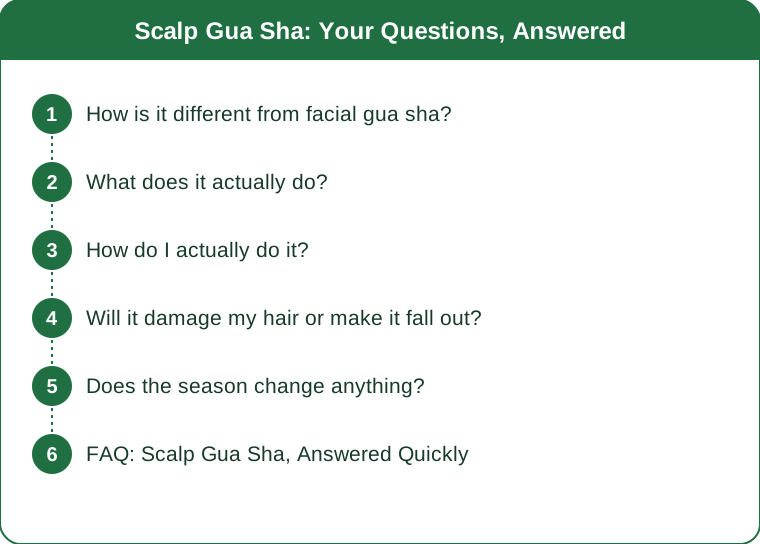
How is it different from facial gua sha?
Different tool, different pressure, different purpose.
Do I need a different tool?
Yes, practically speaking. A flat facial stone will not move through hair. A gua sha comb - a stone or wooden tool with wide, rounded teeth - is the right shape, and it works dry through hair. Some people use the notched edge of a facial tool at the hairline, which is fine for the edges but not for the crown.
Is the pressure different?
Considerably firmer. Facial gua sha is famously light - the weight of the tool plus a little. Scalp gua sha works on tissue that sits over bone, with a tough fascial layer underneath, and it needs firm, steady pressure to do anything. It should feel like a firm scalp massage, not a scrape.
Do I need oil?
No, and generally you should not on the scalp itself - it makes hair greasy for no functional benefit, since the comb is moving through hair rather than dragging on skin. A scalp oil is a separate treatment; if you want to use one, that is a different routine.
Wet or dry hair?
Dry. Wet hair is at its most fragile and combing it under pressure causes breakage.
What does it actually do?
Three things with reasonable support, and one that needs qualifying.
Does it relieve tension?
Yes, and this is the strongest claim. The scalp has a continuous fascial layer - the galea aponeurotica - connecting the muscles at the forehead and the back of the head. Tension in that layer is genuine, palpable, and contributes to the tight-band sensation of a tension headache. Firm scalp work releases it, and most people feel the difference within minutes.
Does it help headaches?
For tension-type headaches, often yes - it addresses the muscular and fascial component directly. It is not a treatment for migraine, and if headaches are frequent, severe, or new, that is a doctor’s appointment rather than a tool. This is general information, not medical advice.
Does it increase blood flow?
Locally and temporarily, yes - that is what the flush is. Whether that translates to anything lasting is the question, and it is where the hair growth claims come from.
Does it help hair growth?
Honestly: the evidence is thin but not absent. The most-cited study found increased hair thickness after 24 weeks of daily four-minute standardised scalp massage in a small group of men. That is a small study, a long timeframe, and it is about massage rather than gua sha specifically. Reasonable expectation: possible modest benefit over months, not a treatment for hair loss.
How do I actually do it?
Direction, pressure, and duration.
Which direction?
From the hairline back toward the crown, and from the crown down toward the base of the skull. You are working with the natural drainage direction and with the grain of the fascia. Short strokes, 5-8cm at a time, repeated.
How much pressure?
Firm enough that the scalp moves under the tool rather than the tool sliding over the hair. You should feel the tissue shift. If it feels like you are just brushing your hair, press harder.
How long?
Four to five minutes is the practical dose, based on the massage research. Longer is not obviously better and it gets tedious.
Which areas matter most?
The temples, the ridge at the base of the skull, and the band above the ears are where tension concentrates. The occipital ridge at the back - where the neck muscles attach - is usually the tightest spot and the most rewarding.
How often?
Daily is fine and is what the research used. There is no need to rest a scalp the way you would rest skin after facial work.
Morning or night?
Night, for most people - it is relaxing rather than energising, and it pairs naturally with taking your hair down at the end of the day.

Will it damage my hair or make it fall out?
The concerns people actually have, addressed.
Will I see more hair coming out?
Possibly, and it is usually hair that had already shed and was held in place by the surrounding hair. Combing it releases it. This is not new loss - it is collected loss becoming visible, and the same thing happens the first time you brush after a few days.
That said - is autumn shedding real?
Yes. Seasonal shedding peaks in late summer and autumn for many people, which means you may start scalp gua sha now and see more hair than expected for reasons entirely unrelated to the tool. Worth knowing before you draw a conclusion.
Can it cause breakage?
If you use it on wet hair, on tangled hair, or with a tool with sharp teeth, yes. Detangle first, work on dry hair, and use a tool with wide rounded teeth.
Can I bruise my scalp?
Much harder than on the face, but possible with excessive pressure on a bony area. Redness that fades within an hour is normal; soreness the next day means too much pressure.
What if I have a scalp condition?
Avoid it on active psoriasis, eczema, open or irritated skin, or infected areas. If you have a diagnosed scalp condition or are being treated for hair loss, ask the professional treating you before adding it. This is general information, not medical advice.
Does the season change anything?
It does, and now is when it starts.
Why does my scalp feel different in autumn?
Indoor heating dries the air and the scalp with it. As heating starts, scalp dryness, tightness, and flaking all increase - and a tight, dry scalp is exactly the tissue that benefits from this work.
Should I add oil in the drier months?
A scalp oil once a week is genuinely useful in autumn and winter, separate from the gua sha. Do the gua sha dry, and treat the oil as its own thing on a different evening or before washing.
Does the tool feel different when it is cold?
Stone tools get cold, and a cold stone on a scalp is unpleasant. Warm it in your hands first, which takes about thirty seconds and makes the whole thing more comfortable.
Is autumn a bad time to judge results?
For hair, yes - seasonal shedding confounds everything. If you are starting now specifically to assess hair effects, take a photo and reassess in the new year rather than in six weeks.
Does it help with hat hair and hat tension?
Genuinely, yes. Hats compress the scalp and the hairline, and once hat season starts, a few minutes of scalp work in the evening addresses exactly that compression.
FAQ: Scalp Gua Sha, Answered Quickly
Can I use a regular comb instead?
Yes, and a wide-tooth wooden comb with rounded teeth does most of the same job. The tool is not magic; the pressure and the direction are what matter.
Jade, rose quartz, or wood?
Wood is warmer, lighter, and less likely to snag. Stone feels more substantial and holds temperature. No functional difference in results.
Should I do it before or after washing?
Before, on dry hair. Working the scalp before a wash also loosens buildup, which makes the wash more effective.
Can I do it with hair extensions or a weave?
Work around the attachment points and be gentle. Ask whoever installed them - tension on the bonds is the thing to avoid.
How long before I notice anything?
Tension relief: immediately. Anything hair-related: months, if at all.
Is it worth buying a dedicated tool?
It is inexpensive and it does the job better than improvising. If you already have a wide-tooth wooden comb, start with that and see whether you keep the habit before buying anything.
TL;DR:
- Scalp gua sha uses a toothed comb tool, firm pressure, dry hair, and no oil - it is not the facial technique.
- The real benefit is fascial tension release, which helps tension-type headaches and the tight-band feeling.
- Hair growth evidence is thin - a small study on daily four-minute massage over 24 weeks. Modest expectations.
- Work hairline to crown, crown to occipital ridge, in short firm strokes for four to five minutes, daily.
- Extra hair coming out is usually already-shed hair being released - and autumn seasonal shedding confounds the picture.
- Heating season makes the scalp drier and tighter, which is when this is most useful. Warm the stone first.
It is a small habit with a reliable small benefit. Buy it for the tension relief, and treat anything else as a bonus you assess in the new year rather than in six weeks.
Keep Reading
This article is for general informational and styling purposes only. Fit, sizing, and product availability may vary.